Now more than ever, HVAC companies are facing fierce competition. Their “loyal” customers live in a world of Google and Yelp, where competitors are just a “click” away. A few decades ago, a company sticker on the side of the equipment or a refrigerator magnet was an effective method of acquiring repeat business. However, in today’s competitive landscape you will need to do much more to ensure your HVAC company has enough business to keep service trucks on the road. So, what is the most effective way of ensuring repeat business? You may be surprised to discover that the answer isn’t 5000 postcards or a fancy van wrap. The answer is something that most HVAC contractors are very familiar with – service agreements.
Recent research concluded that over 80% of customers who have purchased a service agreement from an HVAC company will use that company when it is time to replace or repair equipment. Furthermore, the cost of acquiring that repeat business is 6 times less than the cost of acquiring a brand-new customer. According to HVACR Magazine, HVAC companies should aim for 300 service agreements per technician to ensure maximum profitability and a steady stream of business. Unfortunately, a quick look at most HVAC contractor customer lists will reveal far less than the recommended target.
Clearly, a solid service agreement customer base is essential. So, why don’t HVAC contractors have more of them? An overwhelming majority of HVAC business owners cite the lack of sales strategy as the number one culprit to sluggish service agreement sales. Owners will often discuss service agreement sales during their weekly team meetings and provide glossy brochures to be distributed to homeowners only to be disappointed with the results. All the service agreement hype rarely has an impact because it doesn’t get to the core of the issue – the technician.
By nature, technicians are focused on solving problems rather than selling and paperwork. This is not necessarily a bad thing as it can result in a great customer experience. But clearly it falls short of the needs of a thriving, growing HVAC company. To bridge-the-gap between servicing and selling, we must give our technicians effective ways of doing both.
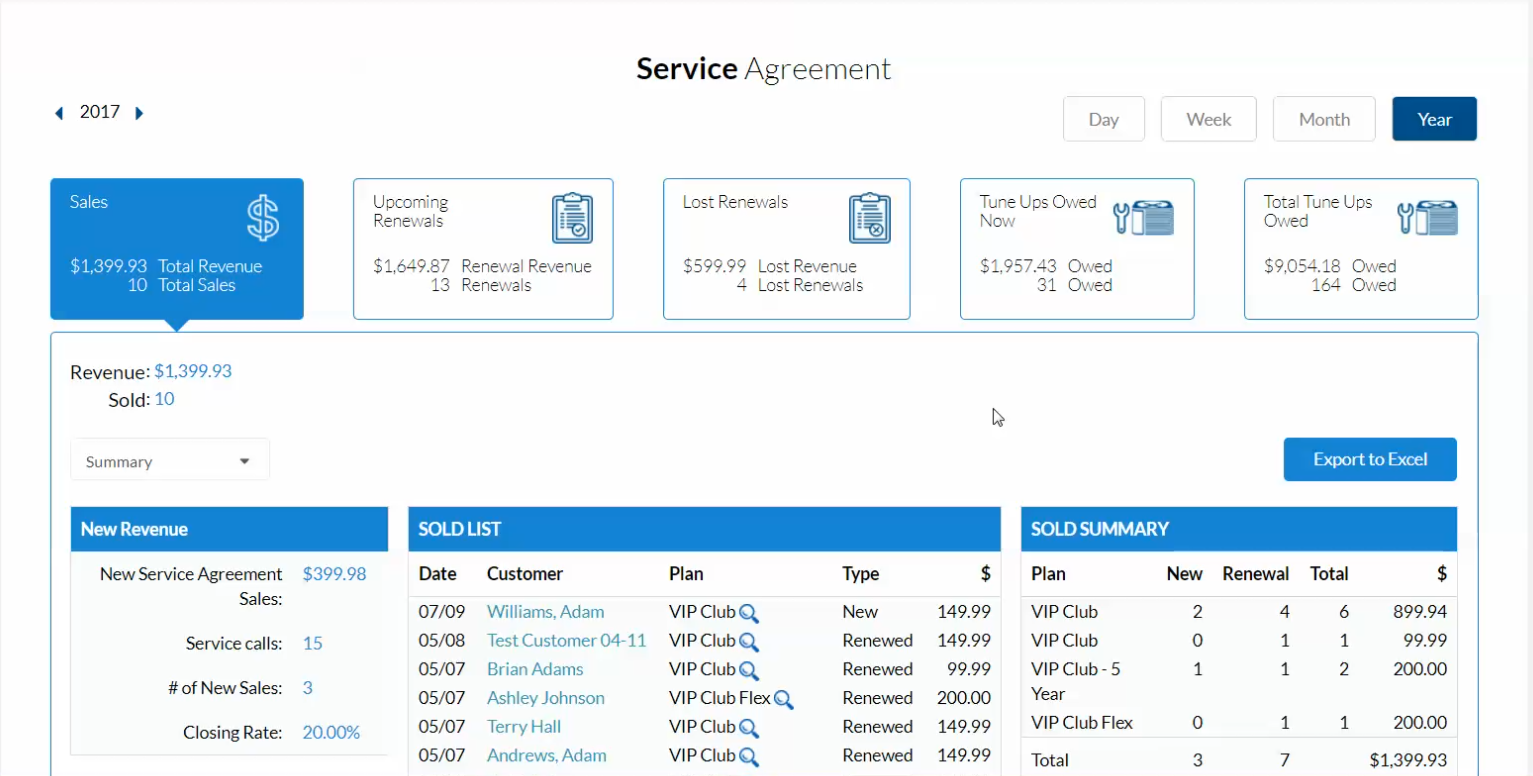
That’s where software like P3 can make a huge difference. The two-column invoice displayed in P3 prompts the customer to ask about service agreements by displaying the potential savings for the repairs, given that a service agreement was to be purchased. Even better, when using the P3 service agreement feature, there is no cumbersome paperwork for the technician which can also be a sales deterrent. As an added bonus, P3 will also keep track of the tune-up visits that are owed and automatically communicate with customers when it is time to for a seasonal maintenance visit.
It is obvious that service agreements are critical to the health of a stable HAVC company. How will you sell and manage them?